US 2.0
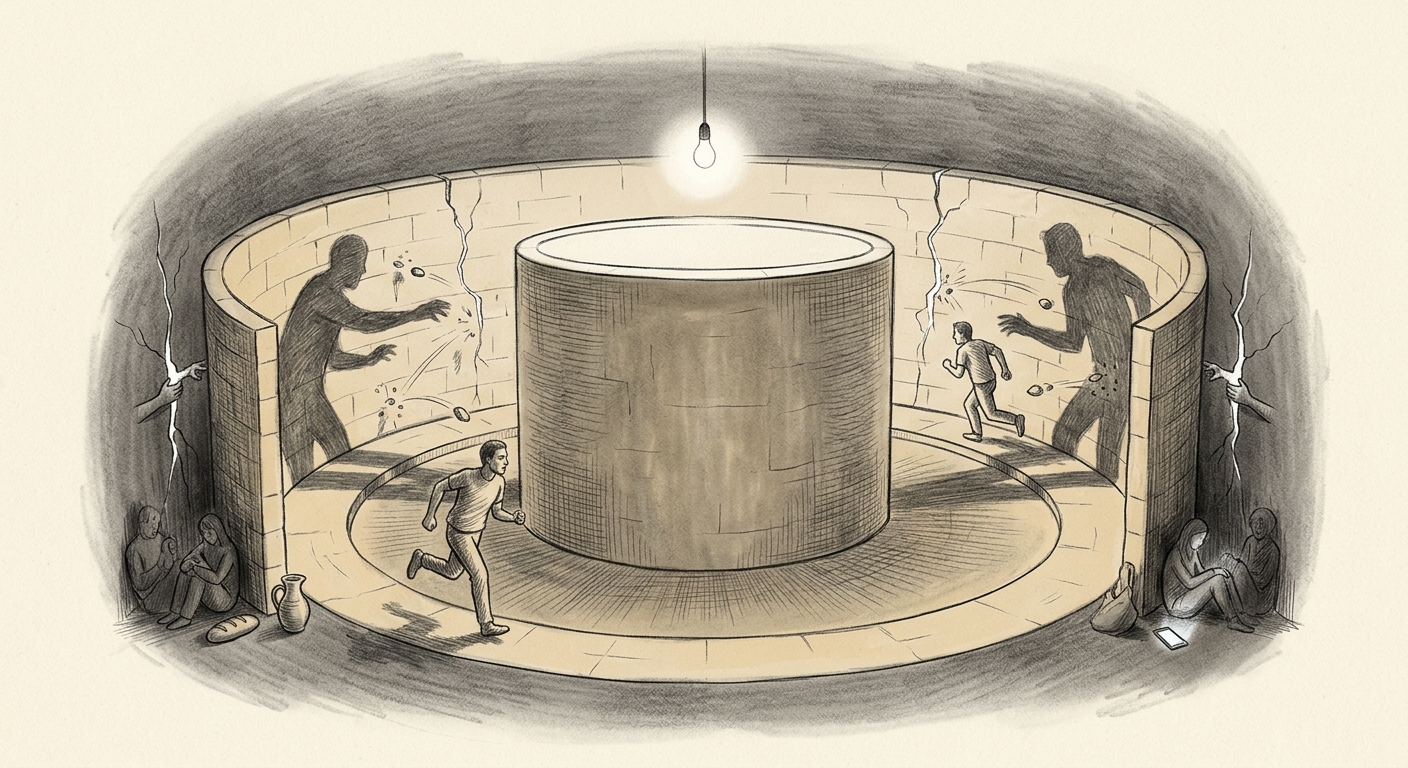
A VPN is a tunnel. Anyone can rent a server, install a tool and have one in ten minutes. You cannot define it in law without banning half of the internet, so a ban on VPNs is never a ban on tunnels. It is a ban on tunnels that do not belong to the state. Millions of Iranians use them every day. When a law is broken by everyone and enforced on one, it is not law. It is a choice of whom to punish. Having no law is better than that.
The real question is not the tunnel but the system behind it. Iran and the US are both global systems. Their constitutions and their ambitions reach beyond their borders, while their people elect them with local expectations: jobs, prices, water, the internet. Both carry the same tension between a mission to the world and a duty at home. Iran is the US 2.0. The difference is the goal. The goal of the US is the US, which may or may not be God. The goal of Iran cannot be anything other than God.
In the US, foreign policy is on the ballot. That sounds like strength until you see what it allows. A population can vote for “destroy Iran” in a single election, driven by a single mood. In Iran, nothing like that happens by public vote. The leader would have to choose it himself, and he would carry it alone. Absolute guardianship is absolute responsibility. It is not an invitation to step into everything. It is the opposite. No one can hold responsibility for everything, so a wise holder of that position should step out of every area that is not his.
That is also its limit. A system whose goal is God has no fallback. A secular state can serve itself and survive. A state built on God cannot. The moment anything else takes God’s place, its own survival, its power, its comfort, the whole structure falls apart. Asking “who decides what God wants?” is asking the wrong question. God decides. The only thing the system has to do is let God be God.
This is why the US attacking Iran is a misunderstanding. Washington reads the language of God as a cover for power, because that is how its own system works. Tehran’s flexibility of decision, a long view held by the same institutions across decades, meets a US that changes direction every four years. That gap will keep being exploited as long as the US treats Iran as just another rival nation chasing its own interest.
The way out is simple to state. The US can keep its interests, but it has to respect the rights that belong to Iranians, not only those that belong to their government. And the same standard binds Iran: a system that claims God must serve God, and through that, its people. Done that way, Iran is not the enemy of the US system. Iran cannot be anything other than the US system done right.